405. continuing entrance gate construction

02 Aug 2010

Buenos Aires, Recoleta Cemetery, entrance gate

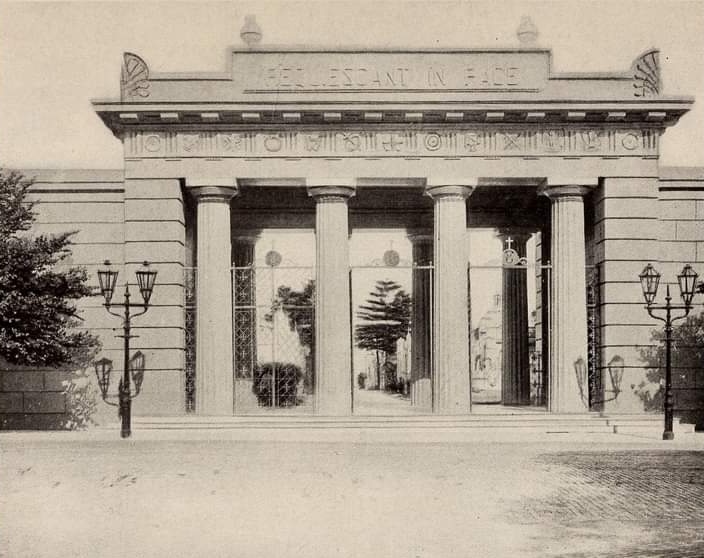
Following the rain damage in February 2010, access to Recoleta Cemetery through the main entrance gate was restricted. Urgent repairs were necessary, & at the closing of this blog in March some restoration had begun. Returning 3.5 months later, the city government seems to have taken advantage of events to undertake a larger project.

A few details are available on an infopanel located outside. In the space of 45 days, the city will pay Naku Construcciones about 225,000 pesos (currently U$S 57,000) for restoration under the supervision of architect Santiago Jorge Bayazbakian. Of Armenian descent, Bayazbakian has done a number of works for the city under Macri’s administration. What’s unclear is how the final project will look. Sketches show day & night representations of the cemetery, but as it appeared before the staircase destruction in May 2010… no handicapped ramp to be found:

Buenos Aires, Recoleta Cemetery, entrance gate

Covering the entire gate is the following text:

Buenos Aires, Recoleta Cemetery, entrance gate

Aquí se encuentra el peristilo de acceso al Cementerio de la Recoleta, obra del arquitecto Juan Buschiazzo. La construcción del peristilo le fue encomendada en 1880 por el primer Intendente de la ciudad de Buenos Aires, Torcuato de Alvear, en el marco de la remodelación integral del Cementerio. Consiste en un pórtico de entrada con doble hilera de columnas dóricas y escalones de mármol de Carrara blanco. Fue declarado Monumento Histórico Nacional por Decreto 1.289/07. La obra actual busca readecuar el acceso al peristilo del Cementerio de la Recoleta, recuperando su diseño y características al momento de ser declarado Monumento Histórico, resguardando y poniendo en valor este destacado icono del Cementerio y de la ciudad.

Here can be found the peristyle entrance of Recoleta Cemetery, the work of architect Juan Buschiazzo. The peristyle’s construction was commissioned in 1880 by the first mayor of the city of Buenos Aires, Torcuato de Alvear, as part of a remodel of the entire cemetery. It consists of an entrance gate with double rows of Doric columns & white Carrara marble staircases. It was declared a National Historic Monument by Decree 1,289/07. Current works seek to refurbish the peristyle entrance, recovering its design & characteristics at the moment it was declared a historical monument, saving & recognizing this well-known icon of the cemetery & of the city.

It is interesting how the text alludes to the staircase destruction for those in the know & how it provides a cryptic message for those who don’t. There is no mention of rain damage. If the staircase is to be replaced, where will the marble come from? Seems like such a large project would take more than 45 days.

Given current works, the main entrance has been under construction/destruction for over one year:

Buenos Aires, Recoleta Cemetery, entrance gate

Buenos Aires, Recoleta Cemetery, entrance gate

Buenos Aires, Recoleta Cemetery, entrance gate

Until completion of the project, the only access to Recoleta Cemetery is via a service entrance to the left of the main gate:

Buenos Aires, Recoleta Cemetery, entrance gate

404. another star of david

30 Jul 2010

Familia de Uribe y Lecea, Recoleta Cemetery, Buenos Aires, Star of David

At first glance, the Uribe y Lecea family tomb may not stand out much from its neighbors in Recoleta Cemetery. But on closer inspection—just above the false column capitals—two Stars of David hide in the shadows:

Familia de Uribe y Lecea, Recoleta Cemetery, Buenos Aires, Star of David

Marcelo spied the symbols during a visit earlier this year with his daughter… to our mutual surprise. Despite more than 1,000 visits to the cemetery, this discovery proves that there is always something new to be found. Since the removal of the plaque on the Benjamín Breitman family vault, this is the only Jewish image currently in Recoleta Cemetery. Also remarkable is the Christian symbolism outside & inside:

Familia de Uribe y Lecea, Recoleta Cemetery, Buenos Aires, Star of David

Was this tomb purchased & remodeled like so many others? Did family members convert? Or did they not care about the mixed symbolism? While searching for the answers to these questions, the PDF guidebook will be updated to reflect the recent discovery.

403. more reflections

29 Jul 2010

Familia Ovidio Giménez, Recoleta Cemetery

Found inside the Familia Ovidio Giménez-Ema Korek tomb. Previous reflection photos can be found here & here. Sally Blake (a.k.a. Sallycat) sent me a heads-up earlier this year about Julie-Anne Cosgrove who takes photos in the same vein.

402. el regreso de aramburu

28 Jul 2010

Revista Gente, 21 nov 1974, Devuelven los Restos de Aramburu

El mismo ejemplar de la revista Gente que tiene como nota de tapa “Los restos de Eva Perón están en Argentina” contiene otra sorpresa. A continuación del artículo sobre Eva Perón hay un breve ensayo fotográfico titulado “Devuelven los restos de Aramburu”. ¡Esa es suerte!

Pedro Aramburu se convirtió en el presidente de facto de Argentina después de que el golpe militar de 1955 derrocara a Perón. Aramburu también estuvo detrás del robo del cadáver embalsamado de Eva Perón, su viaje póstumo por Buenos Aires y su eventual entierro en un cementerio de Milán. Secuestrado y asesinado por Montoneros (una organización paramilitar pro-Perón), Aramburu fue enterrado en el Cementerio de la Recoleta en 1970. Aunque el cuerpo de Eva fue devuelto a Perón al año siguiente, él no la trajo a Argentina después de su reelección en 1973… Eva permaneció en la antigua residencia de Perón en Madrid. La muerte de Perón en 1974 desató la bizarra serie de hechos de la que informa Gente.

Los Montoneros le presentaron a Isabel Perón un asunto sin resolver después de que se convirtiera en presidenta: querían a Evita de vuelta en Argentina. Para asegurarse de que sus demandas fuera oídas, irrumpieron en el Cementerio de la Recoleta, destrozaron las puertas de bronce de la cripta de Aramburu y robaron su ataúd. Isabel dio su consentimiento e hizo los arreglos para que Eva fuera traída de regreso a Buenos Aires. El ataúd de Aramburu fue devuelto al Cementerio de la Recoleta después de ser descubierto en una camioneta abandonada, y su cripta fue, supuestamente, rellenada con concreto para prevenir cualquier profanación futura. Todavía en 2004, el daño que le infligieran los Montoneros a la tumba de Aramburu era fácilmente visible… miren en la foto la bisagra rota. No esperen ver esto hoy, ya que ha sido reparada:

General Pedro Aramburu, Recoleta Cemetery

El artículo en Gente provee evidencia fotográfica difícil de hallar, de los sucesos descrptos arriba. La policía halló el ataúd de Aramburu en cercanías del Parque Las Heras, en Palermo, y el lugar aparece hoy muy similar a como se veía en 1974. Incluimos aquí el texto completo del artículo, con algunas fotos a título comparativo tomadas en julio de 2010.

————————————————

Revista Gente, 21 nov 1974, Devuelven los restos de Aramburu

Menos de dos horas antes de que llegara al país el avión con los restos de Eva Perón fue devuelto el cadáver de Pedro Eugenio Aramburu. El ataúd  fue hallado en una camioneta abandonada en la calle Salguero, donde estaba la Penitenciaria Nacional.

El hallazgo. En esta camioneta, abandonada en la calle Salguero frente al número 2410, fueron encontrados, a las 8.30 del domingo, los restos del ex presidente provisional Pedro Eugenio Aramburu. Su cadáver había sido robado la noche del 15 de octubre último, de su mausoleo de la Recoleta, por un comando extremista que rompió los candados de la bóveda luego de haberse ocultado en el cementerio hasta después de la hora habitual del cierre de los portones principales.

Revista Gente, 21 nov 1974, Devuelven los restos de Aramburu

Buenos Aires, Parque Las Heras, Calle Salguero

Amplio operativo. Luego de anunciada anónimamente la devolución del cadáver la camioneta fue rodeada por policías y patrulleros. El vehículo tenía en el lado izquierdo del parabrisas una cruz verde, distintivo que usan los médicos. La devolución del cadáver fue anunciada mediante llamados anónimos a las redacciones de los diarios.

Revista Gente, 21 nov 1974, Devuelven los restos de Aramburu

Buenos Aires, Parque Las Heras, Calle Salguero

Llega la policía. Agentes uniformados y de civil llegaron rápidamente al lugar. El ataúd fue levado al cuartel de la Policia Montada, donde lo reconocieron el general Bernardino Labayru y el señor César Noguera, amigos del ex presidente provisional asesinado.

Los detalles. La camioneta tenía vidrios opacos y carecía de puerta trasera. Para cubrir el ataúd los extremistas usaron dos placas de telgopo y lo envolvieron con lonas cosidas de color marrón. En la tapa del féretro, estaban, intactos, el crucifijo y la placa de bronce con el nombre del Ttl. Gral. Pedro Eugenio Aramburu.

Revista Gente, 21 nov 1974, Devuelvan los restos de Aramburu

Remember: The complete story of Eva Perón’s postmortem journey can be found in the Recoleta Cemetery PDF.

401. new regulation

27 Jul 2010

Recoleta Cemetery, new regulation

Above is a composite photo taken today requesting that anyone entering the cemetery kindly refrain from photographing caskets.

Not sure why anyone would care… part of the benefit of being laid to rest in Recoleta Cemetery is that all visitors can take a peek inside the family vault. No one seemed to be monitoring but if someone has more info about this recent regulation, I would gladly add it to this post.

Over the next couple weeks, there will be a bit of new content added here since big changes taking place at the cemetery these days… maybe even a new bio! How exciting :)

400. hasta luego… for now

10 Mar 2010

Beautiful decay, Recoleta Cemetery

All good things must come to an end, & after several years of researching Recoleta Cemetery it’s time to move on to other projects.

That’s not to say there won’t be any more posts ever. We will likely continue to post as time permits but nothing as regular as our standard 3 posts/week. The prolonged pause is necessary in order to develop additional walking tours around Buenos Aires… & the rest of the world. Exciting stuff. Also, another year of full-time work in Europe means I will be away from Buenos Aires for most of this year.

By way of a summary, here are a few interesting stats:

First post: 03 Oct 2007

Total # of posts: 400

Total word count: almost 82,000 or about the size of a small novel

Readership: over 3,000 unique visitors per month, about 180-200 per day. Amazing for a blog about a cemetery!

Most comments: Liliana Crociati de Szaszak

Total number of photos posted: almost 1,200

Photos which can be viewed large in Flickr: 81

Number of bilingual posts: currently 155, or 39%

Posts which still need to be written: Roca, Lavalle, Dorrego, several tombs which are considered a National Historic Monument & many others

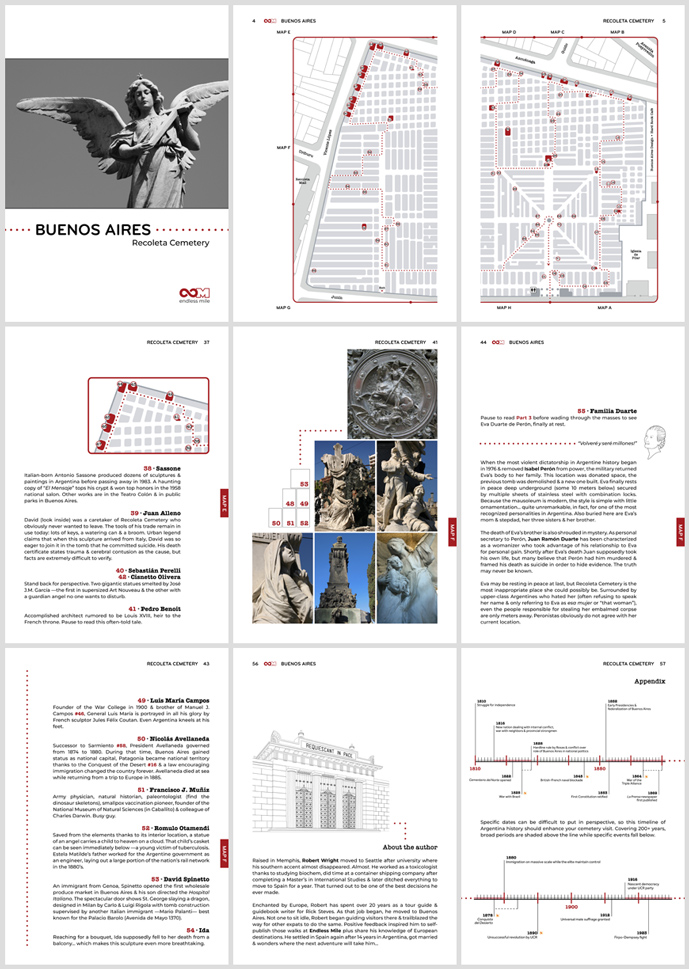
This blog will remain online for as long as possible. Since so little information in English exists about Recoleta Cemetery, this should remain a valuable resource for the future. Much work is left to be done to make the blog completely bilingual… it will come eventually. Purchasing the PDF or making a donation will help maintain this site for everyone.

The demystification of urban legends is something Marcelo & I have worked hard to accomplish. Recoleta Cemetery—the most visited site in Buenos Aires—has much more value than those few wild & crazy stories. As the last paragraph of the PDF guidebook states:

… in spite of all the money spent to be immortalized forever, it is difficult to ignore the irony that so many prominent families have fallen on hard times. Argentina today is not the country those families envisioned, whatever their personal ideology. Several of the same issues they tried to resolve still exist today for a different generation. Recoleta Cemetery should therefore offer guidance & hope for the future. What better place to be inspired by beauty, honor past achievements & learn from previous mistakes?

Enrique García Velloso, Recoleta Cemetery